Responsible Whale Watching in Tenerife
The rules, the Barco Azul licence, and the honest state of enforcement in Europe’s only Whale Heritage Site.
The Teno-Rasca strip carries a designation that most whale watching destinations do not have, and a set of rules to go with it. Whether a given trip respects them is down to the operator.
The rules
Within these waters it is prohibited to chase cetaceans, to feed them, and to swim with them. Boats must keep their distance, and a maximum of two vessels may be near a pod at any one time.
The behaviour those rules produce is a boat that approaches slowly, cuts its engines at a distance, and waits. Sometimes the animals come closer. Sometimes they do not, and a good skipper accepts that rather than repositioning repeatedly to chase a better view.
The honest state of enforcement
The designation is real. Enforcement is reported by conservation groups working the area as weaker than it should be, and boat traffic in the channel has grown with tourism. Some operators keep a respectful distance; others crowd pods, and the rules alone do not stop them.
We would rather say that plainly than imply that a protected area guarantees good behaviour. It does not. It gives you a standard to hold an operator to.
What to look for
The Barco Azul licence. This is the official marker for boats certified to approach cetaceans in Canarian waters. Its presence is the single easiest signal to check.
Explicit no-chase language. Operators who describe cutting engines and waiting are describing the correct behaviour, and they tend to mean it.
Smaller passenger numbers. Not a rule, but fewer people generally means less pressure to deliver a close encounter on schedule.
No promises about swimming with animals. If a listing implies you can, that is not a grey area — it is prohibited.
What to do on the boat
Stay on the side the crew asks you to, keep noise down when the engines cut, and do not encourage a skipper to move closer. The rules exist because repeated close approaches change how the animals rest and feed, and a resident population absorbs that pressure every single day of the year.
Why it matters more here
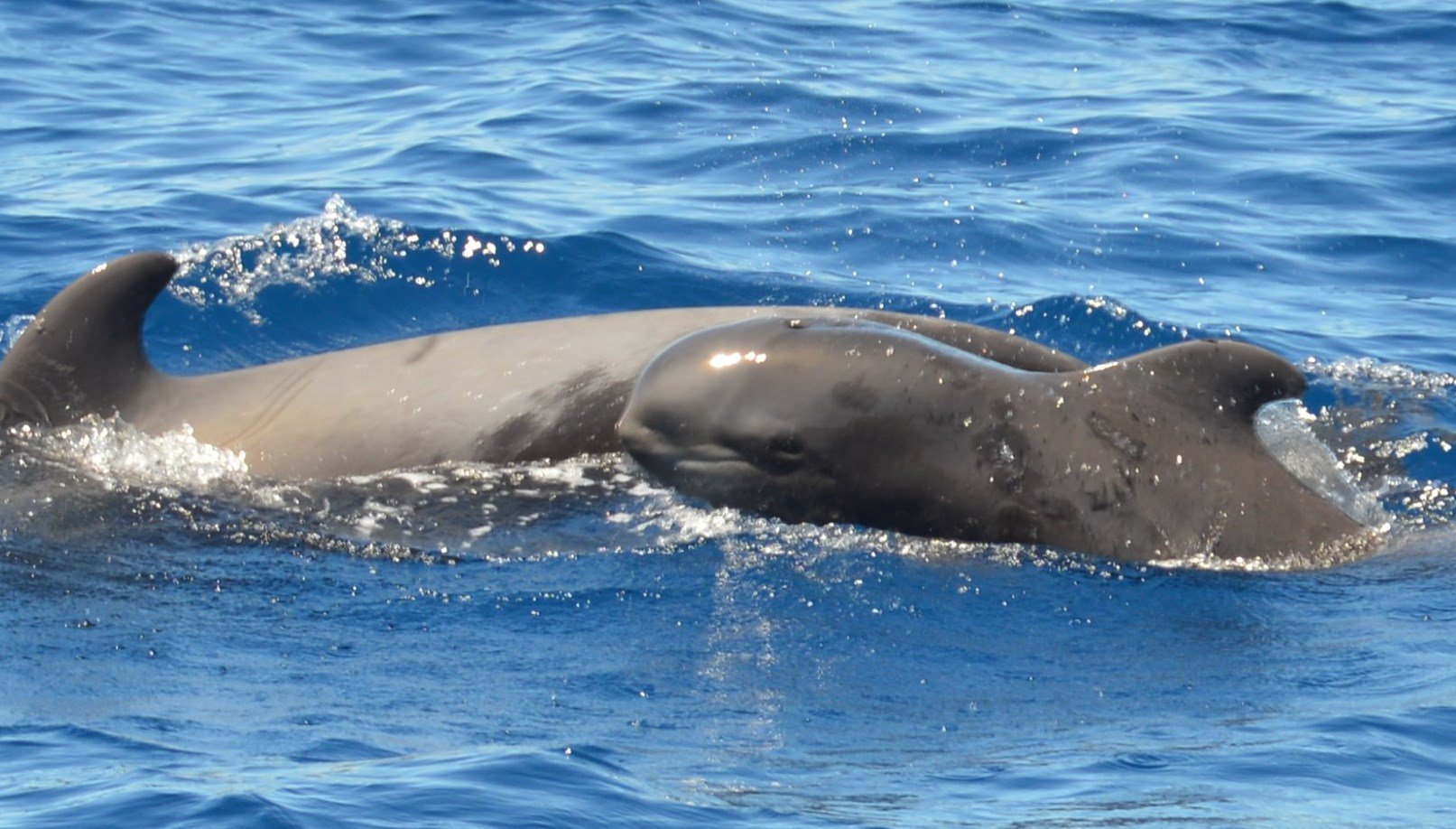
These animals do not migrate away. Whatever the boats do this season, the same pods live with the consequences next season. That is the argument for paying a little more for the operator who keeps their distance.
Pick a Boat That Keeps Its Distance
The animals are here every month of the year. What changes the trip is the operator — how many people are on board, and whether the skipper cuts the engine and waits instead of chasing.
Check Availability & Book